


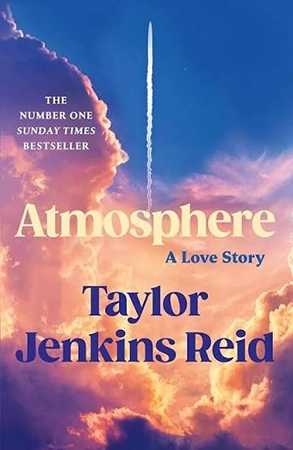
The author of one of the bestselling books, The Seven Husbands of Evelyn Hugo, Taylor Jenkins Reid has brought back another banger work of historical fiction, Atmosphere, set against NASA’s space program in the 1980s, following Joan Goodwin, an aspiring astronaut at NASA, and her queer relationship with her colleague Vanessa.
Selected as the Good Morning America Book Club choice for June 2025, Atmosphere Taylor Jenkins Reid felt like an exciting blend of space exploration and a secret love story beyond the realms of Earth and space. If you’re looking for modern themes, like women in male-dominated fields and a queer love story, this one is a perfect pick for you. Follow along to learn more about the Atmosphere book review, themes, characters, writing style, and more.
| Book Title | Atmosphere |
| Author | Taylor Jenkins Reid |
| Genre | Romantic Fiction |
| Language | English |
| Publishing Year | 2025 |
| Number of Pages | 410 |
| Price Range | $8 to $12 |
| Format | Paperback |
| Total Reading Hours | 20-24 hours |
| Main Themes | Ambition, Friendship, and Queer Love |
| Get Your Copy | Amazon |
| My Ratings | 4/5 |
- Atmosphere Taylor Jenkins Reid Blurb: A Quick Spoiler-Free Synopsis
- Themes in The Novel Atmosphere That Stood Out To Me
- Thoughts on Protagonists of the Novel Atmosphere Taylor Jenkins Reid
- Taylor Jenkins Reid’s Writing Style in the Atmosphere Novel
- What I Liked and What I Did Not Like About the Atmosphere Novel
- My Favourite Quotes From the Novel Atmosphere By Taylor Jenkins Reid
- Books Similar to Atmosphere That You Must Read
- Final Verdict: Is the Atmosphere Book By Taylor Jenkins Reid Worth Reading?
- Frequently Asked Questions (FAQs)
Atmosphere Taylor Jenkins Reid Blurb: A Quick Spoiler-Free Synopsis

Atmosphere by Taylor Jenkins Reid is the story of historical fiction and romance novel set in the 1970s and 1980s. It traces Joan Goodwin, one of NASA’s first female astronauts and a space program scientist.
She always dreamt of becoming an astronaut at a time when women were only beginning to be seriously considered for the role. However, her life takes a turn when NASA opens its astronaut program for female applicants for the first time, and luckily Joan secures her place in the training program. The story uses a dual-timeline structure, opening with a catastrophic space shuttle crisis in 1984 before rewinding to 1977 when she first applied to NASA.
As she arrives at Houston’s Johnson Space Center, she eventually becomes a CAPCOM communicator at mission control, a guiding voice for astronauts during critical moments. However, she is stuck between her complicated relationship with her sister Barbara, who expects Joan to remain involved in caring for her daughter Frances, and the new physically and intellectually challenging responsibilities at NASA.
At NASA, Joan develops a close bond with Vanessa, an engineer, and their friendship eventually turns into love. However, the relationship comes at their own risk. Set in the 1980s, the novel depicts a time when Joan and Vanessa cannot openly acknowledge their relationship, as it would mean risking their career, families, and friendships.
However, the story takes a dramatic turn when a serious malfunction during a space mission leaves Vanessa injured and trapped as the space shuttle attempts to re-enter Earth’s atmosphere. Whether their love story continues and they reunite is something left for the readers to find out!
Themes in The Novel Atmosphere That Stood Out To Me
Being a fan of feminist works, I quite liked the ideas of women’s independence, ambition, career, and the sexism that the novel portrayed. It’s realistic and raw. Similarly, the idea of queer love and heteronormativity was refreshing to read.
Here are my thoughts on the themes that stood out to me:
1. Women’s Independence, Ambition, Sexism, and Career Roles
One of my favourite themes in the novel is its exploration of women’s independence, ambition, sexism, and career goals. The fact that the novel depicts how even dreaming of entering a NASA program was a big deal for a woman in the 1980s shows the devaluation and discrimination at its core.
For Joan, it was a far-fetched dream, especially in the 1980s, when women were still fighting for the right to work, let alone the opportunity to work in male-dominated fields. It beautifully captures the pressures placed on women to succeed because they knew any failure could be used to question not just their ability, but their gender as a whole and their place in the space program altogether. Consequently, they feel compelled to work twice as hard as men for the same level of recognition.
Secondly, even if a woman enters a male-dominated field, she’s constantly belittled by sexist and misogynistic jokes. For example, at NASA, men frequently make sexist jokes, and even if a woman decides to stand against these men, it does not make sense because people in power are the ones who share the same mindset. As Lydia, one of the colleagues, points out, these are the men who decide a woman’s fate, and upsetting them would mean harming their own career prospects.
Other incidents that speak volumes about this ill mindset is how Vanessa wanted to become a pilot more than anything else, but was barred by systemic intolerance towards women’s success, which allowed only military pilots, and women were excluded from the military at that time.
These are some instances that reflect how rooted patriarchy is and how entrenched sexism limits women’s ambitions- even if they have the talent and determination to succeed.
2. Queer Love and Heteronormativity
The second, and perhaps most prominent, theme is the contrast between a heteronormative family, also known as a “socially acceptable family”. The novel presents two very different ideas of family. The first being, Barbara, her husband Daniel, and their child Frances. According to society, this is a perfect “socially acceptable family”, comprising a man, Daniel, as a sole breadwinner; Barbara, as a homemaker; and children.
Yet, beneath this seemingly functional structure, you can find that this family is nowhere found to be perfect. Frances feels neglected and unwanted, challenging the idea that a heteronormative or seemingly perfect family, from a societal lens, does NOT automatically provide love and security.
On the other hand, we find an “unconventional” relationship between Joan and Vanessa, two women who love each other in a homophobic country. Together, they create a family that society refuses to accept and recognise. Despite being unable to live openly because of homophobic laws and the harm it can cause to their career and familial relationships, they provide ample love and care to Frances.
Personally, this felt like a critique of the heteronormative structure built by society and an assumption that family must consist of only a man, a woman, and children for them to be legitimate. Queer love is not given the legitimacy it deserves, even if they provide familial love and care that a supposedly “ideal” family fails to offer.
Although I feel more complexity and depth in this queer relationship would have added more texture, overall, it was worth reading.
Thoughts on Protagonists of the Novel Atmosphere Taylor Jenkins Reid
Joan Goodwin and Vanessa Ford are the kind of women that literary fiction should produce more of. They are independent, ambitious, work in male-dominated fields, and at the same time, are emotional and loving.
Here are my thoughts on protagonists of the Atmosphere novel:
1. Joan Goodwin
Character Traits: Ambitious, Independent, Loving, Passionate, Woman in STEM.
Joan Goodwin was one of the most emotionally resonant characters for me in the novel. She begins her journey as an astronomy professor at Rice University in Houston and later joins NASA’s Space Shuttle Program; she is the kind of woman I aspire to see in literary works. Her journey matters to me because she entered a male-dominated field as a woman in STEM, at a time when women lacked the basic right to work.
She is a trained pianist and talented portrait artist, yet she downplays her abilities compared to her conventionally “beautiful” sister, Barbara. What I particularly liked about Joan was her perspective on marriage. She sees it as an institution that demands a wife’s subservience to her husband. Breaking all the norms, she is a woman in STEM, defies the heteronormative ideals, and enters into a lesbian relationship, albeit secretly, all of which requires courage.
I liked her contrast with Barbara. Even though Joan is not as “beautiful” as Barbara, she is an ideal woman in my opinion; she is independent, ambitious, passionate, and equally loving towards Frances. So even though Daniel and Barbara’s family satisfies the heteronormativity of US culture, Joan becomes the ultimate parental figure to Frances, giving a broader idea of what it means to be an ambitious woman and a loving family member.
2. Vanessa Ford
Character Traits: Ambitious, Passionate, Loving, Emotional Anchor of Joan
Vanessa is Joan’s romantic partner and one of the most important influences on her journey. The two met during NASA’s Space Shuttle Program, where they belonged to the same cohort. Personally, I liked how she encourages Joan to believe in herself and taps into her courage, which she needed to become the best version of herself. Both of them are emotional anchors to each other.
Secondly, just like Joan, Vanessa is also an independent and ambitious woman. She wants to become a NASA commercial pilot. However, systemic barriers restricted her dreams. NASA required military pilots, and the military did not allow women to be pilots, leaving Vanessa and other women with no means to achieve this position.
In short, her story, personally, underlines that even if you’re an ambitious woman, you’re hardworking, and have all the capabilities, it’s the systemic ill that will stop you, showcasing the entrenched misogyny of the 1980s.
Her relationship with Joan is particularly interesting, as she aims to form a family of her own with Joan and Frances. Again, the need to hide their relationship, considering the homophobic laws of the country. To me, their relationship was more about finding comfort in queer love, challenging the norms, and the emotional cost of having to conceal it.
Taylor Jenkins Reid’s Writing Style in the Atmosphere Novel
Taylor Jenkins Reid’s writing style is simple and honest, capturing the themes, personal ambitions, and relationships. The plot is fast-paced, the prose is accessible, and the non-linear narrative makes this novel a worthwhile read.
1. Pacing
Rating: ⭐⭐⭐⭐⭐
The novel is largely fast-paced, especially as the narrative moves towards the central conflict. Personally, I felt hooked throughout, eager to know what happens next. I was invested in the characters’ personal struggles and ambitions, even though it follows a dual timeline and readers already know that Joan made it to NASA. However, how she did it and what she went through was quite interesting to read.
2. Readability and Language
Rating: ⭐⭐⭐⭐
The prose was accessible, written in simple and easy language, without heavy ornamentation. The sentences were direct and easy to follow. Although the heavy use of scientific and technical terms describing the universe and stars may feel interesting for certain readers, personally, I did not enjoy it much. It disrupted my experience rather than enhancing it.
3. Non-Linear Narrative
Rating: ⭐⭐⭐⭐⭐
Being a fan of non-linear narratives, I cannot not like the momentum and tension that this writing style unfolds. The story opens with a flash-forward, which creates intrigue, and then reveals how characters and events are connected. It reflects the journey of Joan from an astronomy professor to NASA, making it an interesting read.
4. Character-Driven
Rating: ⭐⭐⭐⭐⭐
Although the setting is space-focused, I liked how the writer spent ample time on interpersonal relationships, personal ambitions, love, and women’s experiences in a male-dominated field. For me, these emotional and interpersonal dynamics often carry more weight than any technical details.
What I Liked and What I Did Not Like About the Atmosphere Novel
Here are some things that I liked and things that did not work well for me:
| What I Liked | What I Did Not Like |
|
|
My Favourite Quotes From the Novel Atmosphere By Taylor Jenkins Reid
Here are some of my favourite quotes from the novel Atmosphere:
- “I feel like I could know you forever and still be curious about what you’re going to say next.”
- “Bravery, Joan suspected, is almost always a lie. Courage is all we have.”
- “I love that. I love when people love what they do,”
- “Admitting you were afraid always took more guts than pretending you weren’t.”
- “The rules of society came for everyone eventually: the too big, too small, too wild, too quiet, too strong, not strong enough.”
Books Similar to Atmosphere That You Must Read
If you enjoyed reading Atmosphere by Taylor Jenkins Reid, then here are some other novels based on similar themes that you must read:
| S No. | Books Similar to Atmosphere | Why You Must Read It |
| 1. | The Nightingale | This historical fiction follows two sisters as they struggle to survive and resist German occupation during World War II. |
| 2. | The Seven Husbands of Evelyn Hugo | Another work of historical fiction by Taylor Jenkins Reid, this story follows the glamorous, scandalous life of Evelyn Hugo, a Hollywood icon. |
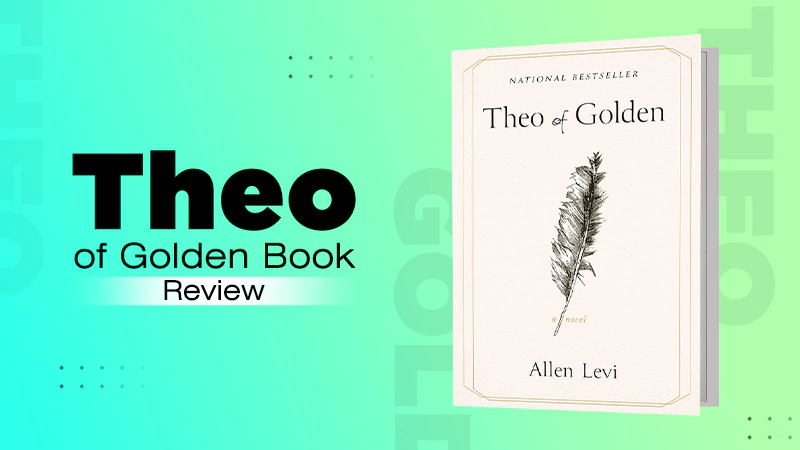
| 3. | Theo of Golden | A simple fiction story by Allen Levi about a mysterious old stranger who transforms lives and community through simple acts of kindness. |
| 4. | One True Love | One True Love by Taylor Jenkins Reid captures the dilemma of a woman, Emma, who is made to choose between her long-lost husband and her fiancé, who helped her heal. |
Final Verdict: Is the Atmosphere Book By Taylor Jenkins Reid Worth Reading?
Yes, the novel Atmosphere Taylor Jenkins Reid is a must-read novel if you’re looking for refreshing and modern themes, such as space programs, women’s ambition and independence, their struggles in a male-dominated field, and a blossoming queer love story in a homophobic era.
Pick Atmosphere Book If You:
- Enjoy historical fiction set around NASA and space exploration.
- Like feminist themes and women in male-dominated fields
- Prefer slow-burn sapphic romance
- Like reading about personal struggles, ambitions, familial love, and relationships.
Skip Atmosphere Book if You:
- Are not interested in space, astronomy, and similar scientific details.
- Prefer minimal technical explanations
- Enjoy a fast, action-driven plot rather than a character-oriented one
Frequently Asked Questions (FAQs)
What is the book Atmosphere about?
Atmosphere book by Taylor Jenkins Reid, is a story about Joan, an astronomy professor who gets a chance to join a NASA training program in the 1980s. Alongside the challenges of working in a male-dominated field, the novel explores her queer relationship with Vanessa, personal ambitions, and relationships.
Is Atmosphere an LGBTQ+ book?
Yes, Atmosphere by Taylor Jenkins Reid is an LGBTQ+ book that explores the sapphic romance between Joan and Vanessa, an engineer.
Is Atmosphere by Taylor Jenkins Reid being made into a movie?
Yes, Atmosphere Taylor Jenkins Reid is being adapted into a live-action movie by Laika Studios. However, no official cast or release date has been announced till now.
Is Atmosphere a true story?
No, the story of the Atmosphere book is purely a work of historical fiction and is not based on a real-life story.