

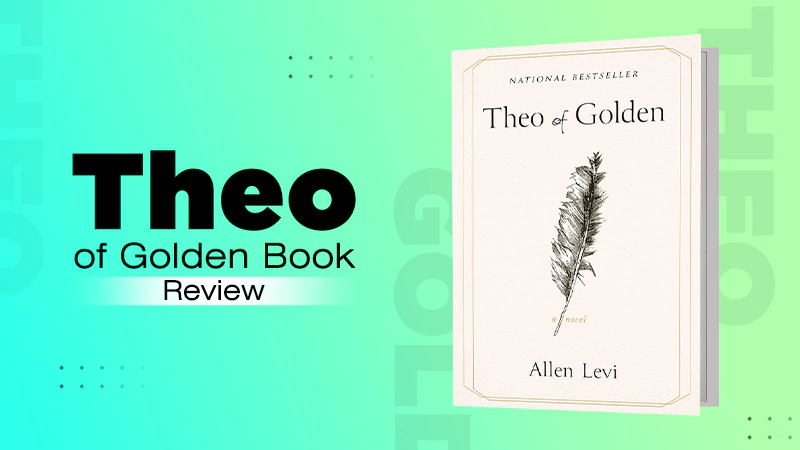
- What is Theo of Golden About? A Quick Spoiler-Free Synopsis
- Themes In The Novel “Theo Of Golden”: My Opinion and Criticism
- Writing Style of Allen Levi in the Novel Theo of Golden
- What I Liked and What I Did Not Like About the Theo of Golden Book
- Books Similar to the Novel Theo of Golden That You Must Read
- My Favourite Quotes From The Novel Theo Of Golden
- Final Verdict: Is the Novel Theo of Golden Worth Reading?
- Frequently Asked Questions (FAQs)
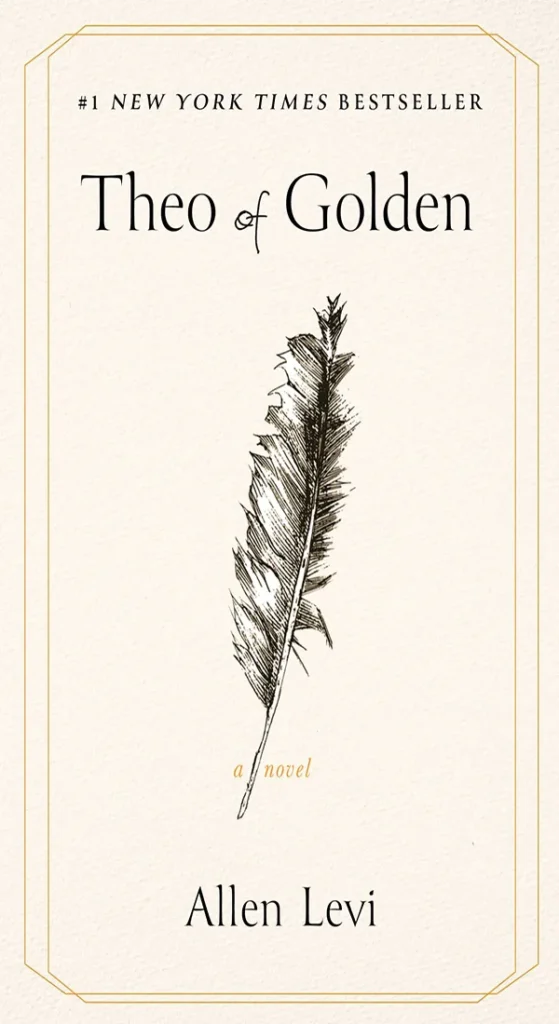
Theo of Golden Book by Allen Levi, published in 2023, is a strangely comforting novel for someone who loves slow-paced writing, appreciates art, and values community: rare things to find in the modern day. When Theo, an elderly man, arrives in Golden, he quietly changes the lives of people around him, building a close-knit community through art, kindness, conversations, and valuing people.
The story is as simple as its cover, but it stays with you throughout. Without much hope in the beginning, when I sat down to read this novel, it painted a bigger story of loneliness, grief, community, and what it means to truly see another person. Follow this article to know more about Theo of Golden book and my opinions and reviews.
| Book Title | Theo of Golden |
| Author | Allen Levi |
| Genre | Fiction |
| Language | English |
| Prizes Won | Best Debut Book Award 2025 |
| Publishing Year | 2023 |
| Number of Pages | 400 Pages |
| Format | Paperback |
| Price Range | $12 to $13 |
| Total Reading Hours | 24-28 Hours |
| Main Themes | Kindness, Compassion, and Importance of Community |
| Get Your Copy | Amazon |
| My Ratings | 3.5/5 |
What is Theo of Golden About? A Quick Spoiler-Free Synopsis
“If it makes us better somehow, maybe that’s what gives it value.”
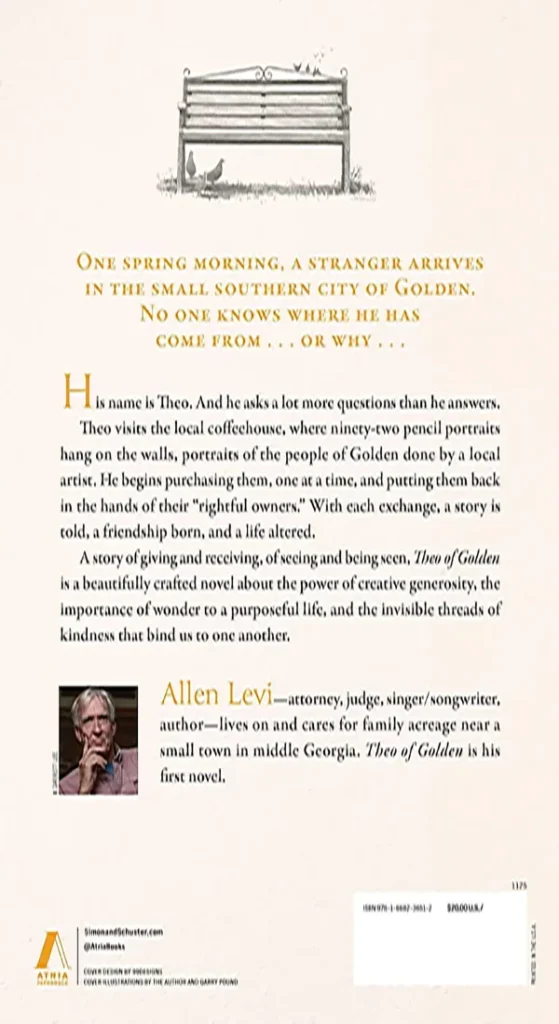
Theo of Golden follows an 82-year-old man named Theo, who arrives in the small Southern town in the United States called Golden. With little explanation of where he has come from and why he has chosen to stay here, Theo quickly settles and becomes a part of the community, striking conversations with Townspeople, finding a new home, and settling into the daily routine.
A part of his daily routine included visiting a local coffee shop, The Chalice. On his first visit to the coffee shop, he was instantly appealed to by the 92 hand-drawn portraits created by a local artist. Being a kind and empathetic individual, Theo was struck by the sadness and longing in those portrait faces.
He plans to buy the unsold portraits, track down the subjects, and personally gift them their portraits, listening to their life stories and truly getting to know them. Through this kind gesture, he not only forms unexpected friendships but also brings people from different walks of life together in Golden, knitting a close community and making people and their sorrows seen.
Themes In The Novel “Theo Of Golden”: My Opinion and Criticism
The feeling of being seen and heard and the value of art in the novel are the themes that stood out to me the most. However, I feel there could be a better way of presentation; here’s my opinion and criticism on the themes of the book Theo of Golden:
1. The Power of Being Seen and Heard
In my opinion, art was the centerpiece and catalyst, as much as Theo was, in creating a close-knit community. The fact that it is through art that Theo realises the sorrow and longings of the people speaks volumes about the importance of true art.
Theo’s decision to buy the 92 portraits and return them to the people becomes a symbolic act of recognising individual worth, sorrow, and their life story. To me, his conversations were never casual exchanges; rather, they gave people a sense of purpose and made them feel seen and heard. I liked how he carefully studied each portrait, arranged meetings, and brought forth the stories that were never known, heard, or seen.
What stood out to me is that Theo realises that sometimes it is not only about offering solutions to people’s sorrow and problems. Rather, it is active listening, emotional availability, consideration, and making people feel valued and known. One of the conversations that I liked was with Ellen, a homeless woman with mental illness, who lost her infant daughter, causing deep psychological trauma. She could have been reduced to symbolism, but the author makes her a complete and fair human.
Theo not only values her but also helps her regain a sense of purpose by igniting her creativity and artistic expression. However, what struck me as a reader was how the person making other individuals feel valued has himself suffered immense personal loss.
In my opinion, Theo was an analogy of Christ, or a Christ-like figure who understands everyone despite gender, social status, wealth, or circumstances. It reminds me of God, who knows it all, understands everyone, loves and accepts people without judgement.
Theo: Christ-Like Figure or Unrealistic Saviour?
I cannot fully comprehend Theo’s character and have a contrasting point of view.
On one hand, Theo seems to be an analogy of Christ, a Christ-like figure, who is compassionate and accepts everyone without judgement.
On the other hand, from a reader’s perspective, I find him an unrealistic saviour and a flawless evangelical figure, which makes him less like a realistic and relatable human being.
Had the author established his purpose more explicitly, his portrayal might have felt more intentional. However, it is left open for personal judgement and perspectives.
2. The Value of Art and Slow Life
Personally, I’ve always admired the idea of leading a slow life, but in a modern world, it seems impossible. However, through Theo, I sense a quiet and slow life, marked by meaningful connections and appreciating art.
The novel relies heavily on art, be it music, literature, paintings, portraits, photography, or even the sunset and rivers. It is admirable how all 92 portraits capture individual longings, sorrow, and tenderness, and how Theo spends a considerable amount of time observing the art; hence, the act of gifting these portraits becomes symbolic of understanding their stories and sorrows. In my opinion, the art here was not a side character; rather, it was a central thread, closely knitting the people of Golden together.
Although I admire the novel’s treatment of art and its message of seeing and valuing other people, I strictly cannot digest the idea of photographing unsuspecting locals, including children, without permission, turning these photographs into portraits, and distributing them. It could be a way of showing kindness, but personally, it felt invasive and crossed personal boundaries. To me, it did not align with the novel’s idea of compassion and how Theo chooses to present it.
Writing Style of Allen Levi in the Novel Theo of Golden
Allen Levi in the novel Theo of Golden focuses on a slow-paced, reflective, and old-fashioned writing style. Here’s what I think about the writing style:
- Pacing: The novel is slow-paced. Chapters unfold slowly, and the narrative is descriptive, offering elaborate descriptions of nature, art, atmosphere, observation, and small-town people.
- Exposition and Climax: I feel the climax was abrupt, considering the core themes of kindness and compassion. There is no action-driven plot; rather, it relies heavily on emotions and authorial reflections.
- Narrative Language: The language is imbued with biblical tones, and so it almost feels like a classical storybook. Readers can find biblical undertones, and the language presents heavy reverence and devotion for kindness and compassion.
In my opinion, the writing style is suitable if you want to read something tender and slow-paced, which does not rush like modern fiction and writing. However, it may NOT be suitable if you avoid simple and irrelevant characterisation. Personally, the language felt simple, with a heavy focus on kindness and compassion, which did NOT seem relatable or realistic.
Pick This Novel If You Like:
- Slow-Paced Writing
- Themes of Compassion and Kindness
- Authorial Reflections
- Descriptive Prose
Skip This Book If You:
- Do NOT enjoy slow-paced writing
- Like Action-Driven Plot
- Love Fast and Modern Writing
What I Liked and What I Did Not Like About the Theo of Golden Book
Although I really liked the depiction of art and the idea that it wants to convey about making people feel known and valued, the narrative somehow becomes overbearing in doing so.
Here’s what I liked and disliked about the novel:
1. What I Liked About the Novel
- The Power of Listening and Making People Feel Heard and Seen
- Representation of Art (To a Certain Extent)
- Emotionally Resonant Characters Carrying Sorrow, Grief, and Longings
- Human Connection and Conversations
- Slow Living and Attention to Daily Routine
2. What I Did Not Like About Theo of Golden Book
- Almost Saccharine and Preachy Tone
- Flawless Protagonist or an Evangelical Figure
- The Idea of Capturing People Without Consent
- Easy Kindness and Compassion; Lacks Relevance and Complexity
Books Similar to the Novel Theo of Golden That You Must Read
If you enjoyed reading the Theo of Golden book, then you must read similar books by other authors with resonating themes and texture:
| S No. | Books | Why You Should Read Them |
| 1. | Anxious People by Frederick Backman |
|
| 2. | The Midnight Library by Matt Haig |
|
| 3. | A Death in the Family by James Agee |
|
| 4. | A Man Called Ove by Frederick Backman |
|
My Favourite Quotes From The Novel Theo Of Golden
Here are some of my favourite quotes from the Theo of Golden book:
- “Unmet expectations have a clever way of showing up at every stage of life.”
- “There is another teaching about kindness,” Theo said. “ ‘Do not let your left hand know what your right hand is doing.”
- “A man who loves all women loves no woman. A man who loves only one woman loves all women.’ Do you agree?”
- “But even old men have young memories.”
- “I was farther along as an artist. She was much farther along as a work of art.”
- “His decision to live small made him larger than life.”
Final Verdict: Is the Novel Theo of Golden Worth Reading?
Yes, the novel Theo of Golden is worth reading if you enjoy slow-paced plots and themes of community, kindness, and compassion. It’s an emotionally warm literary fiction, and hence must be read for its ideas and emotional themes, and not for a nuanced and action-driven realistic story.
Although the novel’s idea of art, attentiveness, close-knit community, interactions, people’s sorrow, and the value of being known and heard is something which I find genuinely beautiful, my Theo of Golden reviews are mixed because its preaching tone, flawless protagonist qualities, and occasional stereotypes can be overwhelming for certain readers.
My Rating: 3.5/5
Frequently Asked Questions (FAQs)
What is the book Theo of Golden about?
The novel Theo of Golden is about an elderly stranger who arrives in the small town of Golden and brings the community together through his acts of kindness, making people feel seen and heard. He creates meaningful connections with townspeople and brings them together.
Is Theo of Golden worth reading?
Yes, the novel Theo of Golden is worth reading if you enjoy slow-paced plots and themes of community, kindness, and compassion. It’s an emotionally warm work of literary fiction, and hence must be read for its ideas and emotional themes, and not for a nuanced and action-driven realistic story.
Why is Theo of Golden so popular?
Theo of Golden is mainly popular for its heartwarming themes and slow-paced life that the novel depicts. It represents a kind of relatable sentimentalism, kindness, generosity, the importance of community, and meaningful connections that we certainly lack in a fast-paced modern world.
Is Theo of Golden a real story?
No, the book Theo of Golden is not based on a real-life story; it is purely a work of fiction. The town of Golden and Theo are fictional settings and characters.