

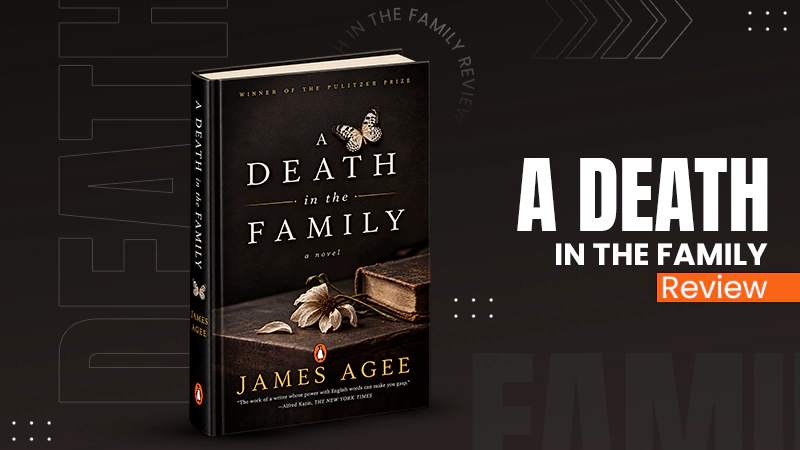
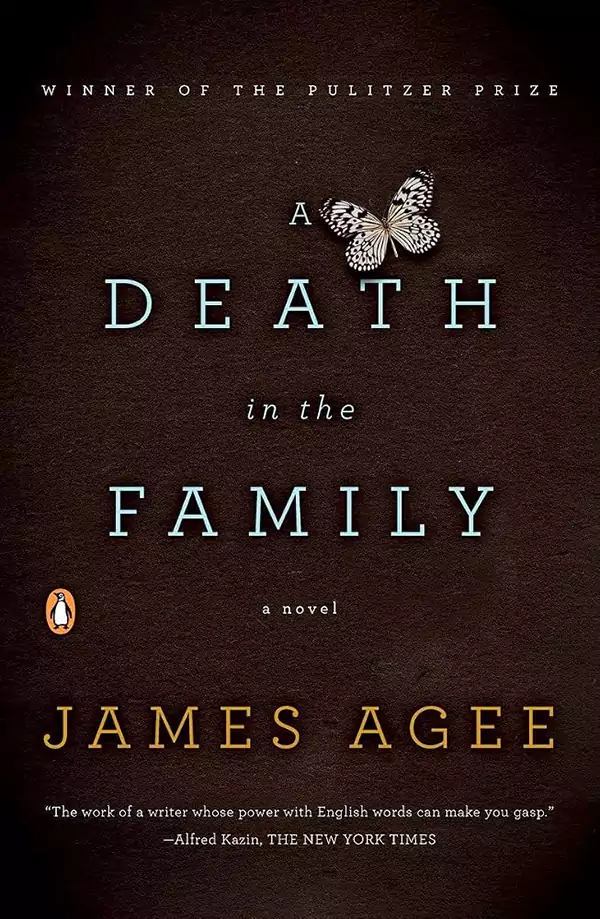
A Death in the Family by James Agee is not really a novel about death; rather, it’s an exploration of what happens to the people who are left behind: the children and the wife. Based in Knoxville, Tennessee, in 1915, the novel is semi-autobiographical, following the family before and after the sudden death of Jay Follet, a husband and father killed in a car accident. The novel was published posthumously in 1957 and won the Pulitzer Prize for Fiction in 1958.
What stood out to me was how A Death in the Family author does not view grief from the dramatic lens; instead, it presents a raw view of what really happens, and its minute manifestations, that is, the confusion among children, the silence between adults, memories of the happy family life, and immediately coming to terms with the fact that a loved one is actually gone. Let me take you through my A Death in the Family review.
| Book Title | A Death in the Family |
| Author | James Agee |
| Genre | Semi-Autobiographical Fiction |
| First Release | 1957 |
| Status | Published Posthumously |
| Restored Version | 2007 |
| Language | English |
| Number of Pages | 336 |
| Price Range | INR 300 to INR 800 |
| Total Reading Hours | 20-22 hours |
| Main Themes | Loss, Grief, Death, Family, Childhood, Innocence, Religion |
| Prizes Won | Pulitzer Prize for Fiction, 1958 |
| Get Your Copy | Amazon |
| My Ratings | 4/5 |
- What is A Death in the Family Book About? A Quick Synopsis
- What Makes This Novel Different From Other Novels About Death?
- Dominant Themes in the Novel: Religion and Grief
- Is the Novel “A Death in the Family” An Easy-Read? Writing Style of the Novel
- What I Liked and What I Did Not Like About the Novel “A Death in the Family”
- Final Verdict: Is the Novel “A Death in the Family” Worth Reading?
- Frequently Asked Questions (FAQs)
What is A Death in the Family Book About? A Quick Synopsis
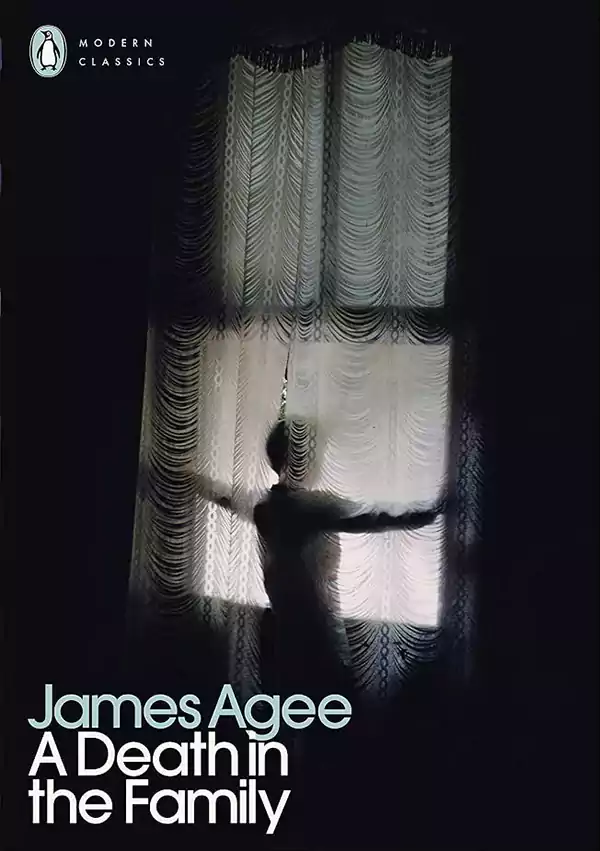
The novel, A Death in the Family, is a subtle portrayal of the before and after of losing a loved one, a husband and father, Jay Follet in this case. At its heart, the novel is about a family comprehending an unexpected loss.
One night, Jay Follet leaves his house after his brother Ralph calls to say that their father is seriously ill and has suffered another heart attack. Although Jay suspects Ralph may be exaggerating, he decides not to take the risk. While returning the next day, Jay Follet was killed in a car accident, leaving his wife Mary and their children completely devastated. The whole family is now forced to process grief in their own ways.
The premise may sound simple, but it’s an in-depth portrayal of the emotional aftermath of an accident, and this is what makes it so powerful.
Did You Know?
The novel is semi-autobiographical in the sense that it draws heavily from James Agee’s own childhood experience. His father died in a car accident when Agee was a young child.
The novel “A Death in the Family” is the author’s attempt to transform his experience into fiction. It’s a memoir of his experiences, published posthumously in 1957, after he died in 1955.
What Makes This Novel Different From Other Novels About Death?
One thing that particularly felt heartbreaking about this novel is its appropriate portrayal and attention to the ordinary. While many books about death may show dramatic descriptions, “A Death in the Family” is not concerned with the tragedy that has already happened, but the aftermath that follows.
It simply shows what remained:
- A heartbroken wife
- Confused and Innocent Children
- A Devastated and Incomplete home
- A Broken Family
What Ordinarily Happens:
- Relatives Come
- People Talk
- Life Continues
This is the cruelty that the novel talks about in the truest sense, that while a family is shattered, the world outside continues to live as if nothing happened. People in the family are expected to move on. But how could they move on from the memories of a loved one?
There are no grand emotional outbursts in the novel; rather, it presents how grief is carried through mundane daily chores, awkward visits, and conversations.
Moreover, a child’s perspective on death is often less talked about, as children do not fully comprehend the idea of permanent loss. Rufus, Jay’s son, does not understand death the same way as adults do. His grief is not marked by emotional outbursts, but by questions, confusion, memories, and his attempt to make sense of adults’ behaviour around him. It shows how a child lacks emotional vocabulary to process the loss.
Did You Know?
The original version of the novel “A Death in the Family” was edited by David McDowell, had a prologue, “Knoxville: Summer 1915,” and included flashbacks and scenes outside the timeline. Hence, it lacked a strict chronological order.
The restored version of 2007 followed a strict chronological order from Rufus’ childhood to the funeral. Moreover, it replaces the prologue with a dream sequence, featuring an adult recollection of carrying his father’s body.
Dominant Themes in the Novel: Religion and Grief
The novel is a wonderful exploration of loss, grief, and religion. Everyone has their own ways of coping and dealing with the loss.
Here’s what stood out to me in A Death in the Family book:
1. Religion
Religion is one of the most talked-about themes in this novel, showcased in both positive and negative light. But personally, it centered in a grey zone. While religion was a form of self-medication or source of strength for Mary, it was a source of conflict for others.
Her faith is the source that gives her something to hold on to while dealing with her husband’s death. It sort of provides her emotional stability when everything around her is falling apart.
For other people, particularly Joel, Mary’s father, and Andrew, Mary’s brother, her devotion was nothing but “abandonment of personal responsibilities”. Her dependence on faith was less of a consolation and more of an escape from her responsibilities that neglected her grieving children. To others, she is “abusing the religion” because of how it has dominated her life. It created a rift between her family.
On the contrary, Andrew says, “Right when they began to lower your father into the ground, into his grave, a cloud came over, and there was a shadow just like iron, and a perfectly magnificent butterfly settled on the-coffin, just rested there, right over the breast, and stayed there, just barely making his wings breathe, like a heart”. Andrew rejects the idea of institutional religion, rather relies on hope.
2. Grief
One thing particularly impressive in the novel was its treatment of grief. It is never predictable; grief is messy. It’s presented in its truest form because people do not always immediately understand what has happened. It takes time to process loss. People continue doing ordinary things; they pray, remember, argue, cope with awkward visits and conversations.
This is what makes this novel and this tragedy particularly human and raw. It is almost an unsettling time when someone is physically absent but emotionally present in memories and feelings.
Is the Novel “A Death in the Family” An Easy-Read? Writing Style of the Novel
Yes, A Death in the Family book is an easy read in terms of its vocabulary or the language. However, the actual prose demands patience, simply because it does not fly through the themes, such as death, grief, or loss.
James Agee spends a considerable amount of time processing the emotions and hence moves away from emotional storytelling; rather, it’s highly descriptive and reflective about the past and the emotions surrounding death in the family. The narrative also shifts perspective from person to person, which means the readers get first-hand accounts of emotions and incorporates memories to make it emotionally rich, offering an almost fluid structure to the novel.
There are moments when you will delve deep into the moments, appreciating the depth and the beauty of how they’re captured. Although it’s not fast-paced, it significantly carries the material to drive the plot.
Pick this book if you:
- Like a descriptive and reflective writing style
- Appreciate slow pace and in-depth exploration
- Like stories processing grief, loss, emotions, family, childhood, and memories
- Enjoy character-driven narratives
Skip this book if you:
- Like fast-paced stories
- Prefer dramatic, plot-heavy narrative, with twists and turns in every chapter
- Find in-depth exploration and descriptive narratives boring.
- Prefer action-driven stories.
Also Read: Till the Last Breath review
What I Liked and What I Did Not Like About the Novel “A Death in the Family”
The novel is an absolute masterpiece when it comes to the in-depth exploration of loss, grief, human emotions, and death. However, for readers looking for action-driven and dramatic plots, it might not be the best pick.
Here’s what I liked and what I found challenging for some readers:
What I Liked About the Novel
- Human Portrayal of Loss and Grief
- In-depth Exploration of Human Emotions and Memories
- Minute Details About Domestic Moments, Awkward Visits, Confusions, Questions, and Conversations
- Different Ideas and Ways of Processing Grief
- Exploration of Religion While Handling Grief
What I Did Not Like
- The descriptive passages require patience to understand.
- Readers looking for conventional and action-driven plots may find it underwhelming.
- The narrative structure is complex with shifting perspectives and past memories, which might be difficult to understand for beginners.
Also Read: Reminders of Him review
Final Verdict: Is the Novel “A Death in the Family” Worth Reading?
Yes, the novel “A Death in the Family” is one of those must-read books to understand the raw human emotions and the complexities and the quietness within ordinary life after surviving a devastating loss. The author of A Death in the Family does not create a dramatic performance around death; instead, it shows how death enters an ordinary happy family and changes everything.
Personally, the most difficult part was not understanding Jay’s death, but it was understanding the condition of Mary, Jay’s wife, and Rufus, who were left behind to cope with the loss, and slowly realising what his absence meant.
Overall, the novel requires patience to understand, and if you’re ready to offer the patience, it offers something much more than a simple death story; it teaches you about the brutal continuation of life after loss, family, and childhood.
Frequently Asked Questions (FAQs)
What is the novel “A Death in the Family” about?
A Death in the Family book is about a family coping with the unexpected loss of Jay Follet, a husband and father, and the emotional aftermath that follows. It explores grief, loss, childhood, innocence, religion, and how different people try to make sense of the loss.
Is the novel “A Death in the Family” autobiographical?
No, the novel A Death in the Family is semi-autobiographical as it draws heavily from Agee’s own childhood. Like Rufus, James Agee lost his father in childhood in a car accident, making Rufus’ family’s experience closely connected to his own personal life.
Is “A Death in the Family” an easy novel to read?
Yes, the novel A Death in the Family is fairly easy to read, considering the simple language. However, it is not fast-paced, as the author spends a considerable amount of time exploring characters, their emotions, and thoughts, and the grief of losing a family member.
Is the novel “A Death in the Family” worth reading?
Yes, A Death in the Family is a must-read novel to understand the raw human emotions and the complexities, and the quietness within ordinary life after surviving a devastating loss.