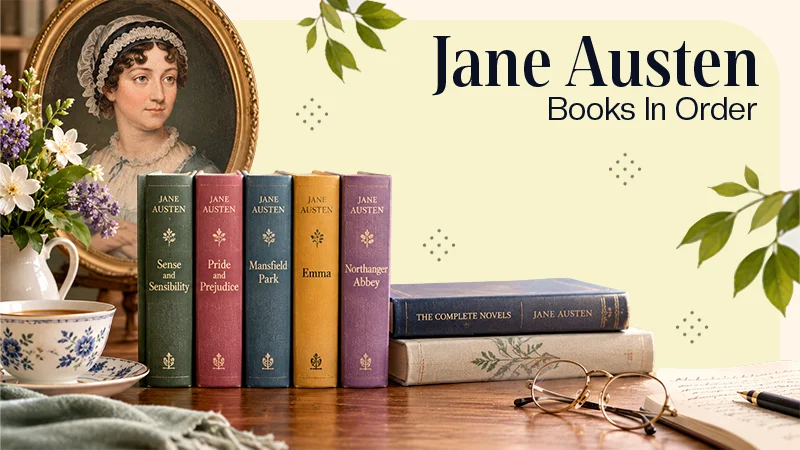
Starting with Sense and Sensibility, followed by Pride and Prejudice, Mansfield Park, Emma, Northanger Abbey, and Persuasion, understanding Jane Austen books in order is crucial to understanding her social commentary and satire. Jane Austen is one of the most influential English novelists of the 18th century, celebrated widely for her contribution to the literary world.
What made her a prominent figure was her witty and satirical writing style, realistic critique of the British landed gentry, social commentary on social class, mobility, and marriage as a means of social and financial security, and the strong female protagonists navigating their lives in an upper-class patriarchal setup.
If you’re wondering how to get into reading the classic Jane Austen books in order, then here’s the list of Jane Austen books in order of publication:
S No.
Jane Austen Novels in Order
Publication Year
1.
Sense and Sensibility
1811
2.
Pride and Prejudice
1813
3.
Mansfield Park
1814
4.
Emma
1815
5.
Northanger Abbey
1817 (posthumously)
6.
Persuasion
1817 (posthumously)
Jane Austen Books in Order: From Sense and Sensibility To Persuasion
Sense and Sensibility, Pride and Prejudice, Mansfield Park, Emma, Northanger Abbey, and Persuasion are the finished and released works of Jane Austen in the order of publication.
1. Sense and Sensibility (1811)
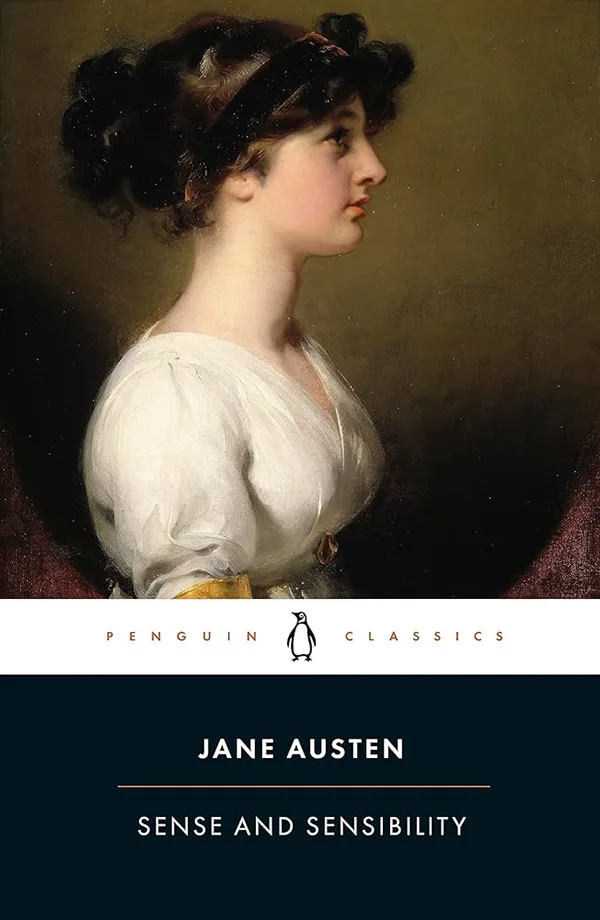
Earlier titled Elinor and Marianne, Sense and Sensibility is Jane Austen’s debut novel, published in October 1811. The novel follows the impoverished Dashwood sisters Elinor (Sense) and Marianne (Sensibility) as they navigate poverty, love, heartbreak, and societal expectations.
The novel captures the societal expectations placed on women and critiques the social precarity that leaves women vulnerable, with no inheritance laws and marriage as the only source of social security in the Georgian era. However, the novel closes with a happy ending, showcasing a perfect balance of reason and passion.
Why You Must Read Sense and Sensibility?
Appropriate social commentary on the plight of women in the Regency Era.
Contrasting yet relatable sisterhood
Ideal introduction to Austen and her writing style imbued with wit, romance, observations, and criticism of society.
Complex relationships with emotional depth.
Did You Know?
The novel Sense and Sensibility was first published anonymously under the phrase “By a Lady” on the title page, where the writer’s name is written.
This novel was the first major success for Jane Austen, with 750 copies published in 1813. It was also the first novel republished after her death, and since then, it has been widely adapted for stage and screen plays.
2. Pride and Prejudice (1813)
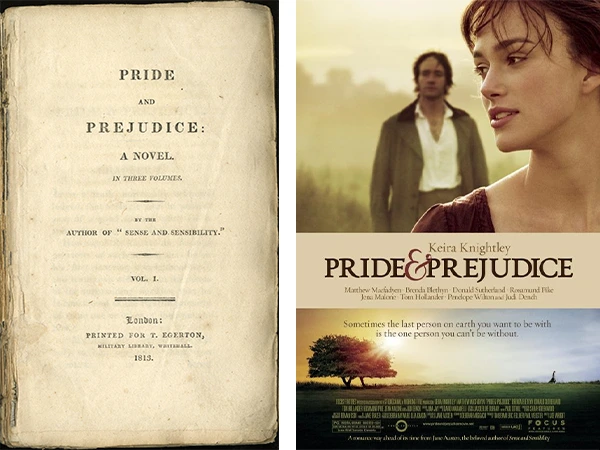
One of the most recognised works of Jane Austen to this day is the novel Pride and Prejudice, holding a prominent place in English literary studies and is taught as an eminent part of the literature curriculum.
Pride and Prejudice follows five Benett sisters for whom marriage is closely tied to financial and social security. The central character is Elizabeth Benett, the headstrong and independent female character, whose earlier prejudices clash with the cold and arrogant Mr Darcy. However, through misunderstandings and personal growth, they realise their deep love and end up marrying each other.
One of my favourite novels, Pride and Prejudice, is particularly interesting because of its social commentary on societal status, class, and marital prospects for women as the only means of social and financial security.
Why You Must Read Pride and Prejudice
Iconic love story of Elizabeth Bennet and Mr Darcy.
Witty Writing Style
Observational and sharp social commentary
One of literature’s most celebrated protagonists.
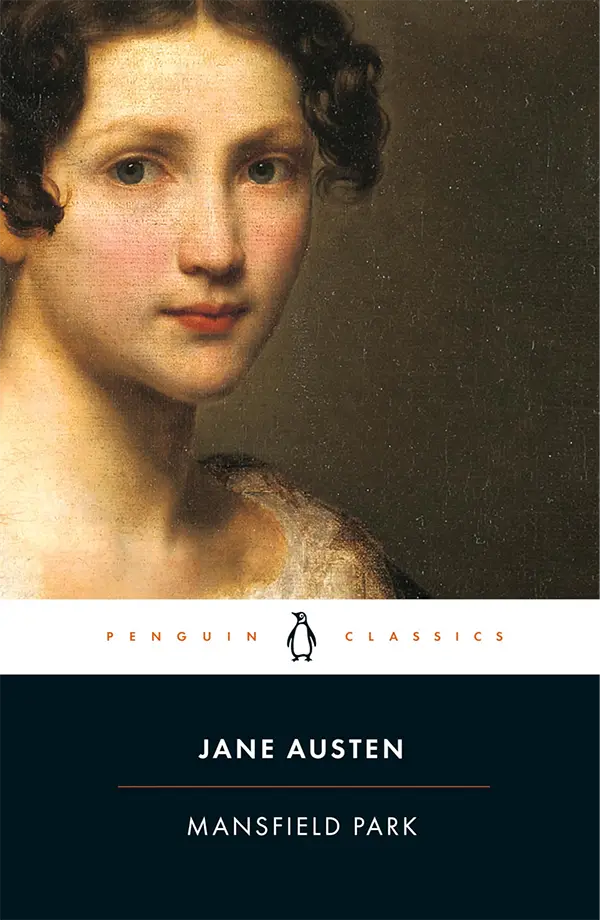
3. Mansfield Park (1814)
The novel Mansfield Park is an underrated gem by Jane Austen, published in 1814. Although it didn’t receive much public attention until 1821, the story is captivating and follows Fanny Prince, a poor young girl, sent by her parents to live at a wealthy relative’s grand estate.
Facing harsh treatment from her aunt, she seeks refuge with her cousin Edmund Bertman, the only person to show her an ounce of kindness and affection, and eventually falls in love with him. Growing up amid the privileged class and their complex family dynamics and neighbourhood, Fanny remains a virtuous character while navigating love, morality, and societal expectations.
Like other novels by Jane Austen, Mansfield Park critiques class consciousness and self-serving false morality. It shows how class, etiquette, and social station dictate treatment in society rather than moral integrity, and the classic Austen theme: marriages built on social status and greed.
Why You Must Read Mansfield Park:
Social Commentary
Fresh Themes of Self-Serving Versus True Morality
Austen’s layered novel
Complex relationships and dynamics.
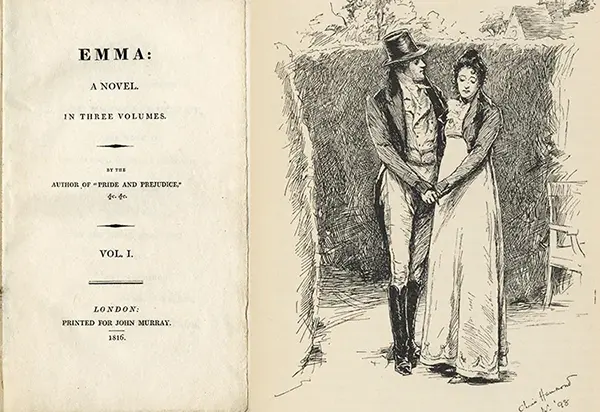
4. Emma (1815)
The last novel published during her lifetime, Emma is set in the fictional country village of Highbury. As a comedy of manners, which uses sharp wit and dialogue to criticise superficial social behaviours, Emma is a perfect exploration of social commentary on marriage, sex, and age.
The novel follows the story of Emma Woodhouse, a “handsome, clever, and rich” heroine who considers herself to be a matchmaker and enjoys meddling in the lives of her friends and neighbours. As she tries to fix the life of her best friend Harriet, she is caught in constant conflict; she hurts people, commits mistakes, and eventually finds love for herself.
What I really liked about this character is that she was not written to please the audience; the female character was clever, spoiled, headstrong, and committed mistakes. Rather, she divided the audience into right and wrong.
Although she was the only Austen’s heroine who did not need to marry for money, the themes of social class, marital prospects of women, and female dependence were very prominent.
Why You Must Read Emma:
Unconventional Female Protagonist
Emma’s Interesting Matchmaking Scheme
Relatable and Flawed Protagonist
Witty and Genius Masterpiece
Did You Know?
Emma has over five screen adaptations, making it one of the most widely adapted novels by Jane Austen. The first two adaptations came out in 1996.
The third adaptation came out in 2009 by the BBC, consisting of four episodes, and the fourth adaptation, called Emma, came out in 2020.
The latest adaptation of this novel is Clueless, a modern take on Emma, which differs in terms of writing style, but the plot is more or less the same.
5. Northanger Abbey (1818)
A coming-of-age novel and a satire of Gothic fiction, Northanger Abbey was one of the two books published posthumously in 1817, six months after Austen’s death.
The story is not a typical Austen novel. It follows Catherine Morland, a naive seventeen-year-old girl, consumed by much of the Gothic fiction, blurring the lines between fiction and reality. As she moves to Bath and confronts friendships, betrayal, love, adventure, romance, fashion, and social expectations, she faces reality and understands that life is no dark mystery.
Although at its center, the novel is a sharp critique of the Gothic novels of terror that consumed much of people’s minds in the 1790s, it also focuses on Austen’s classic themes, such as social ambition, marriage, and reading. Unlike other Austen novels, this is a light and playful read.
Why You Must Read Northanger Abbey:
Light and Playful Read
Unconventional Story by Austen
Satire of Gothic Fiction
Did You Know?
Northanger Abbey went through three names due to publication disputes. First drafted as Susan, it was later changed to Catherine because the name Susan was used for another book, and lastly, Northanger Abbey after her death.
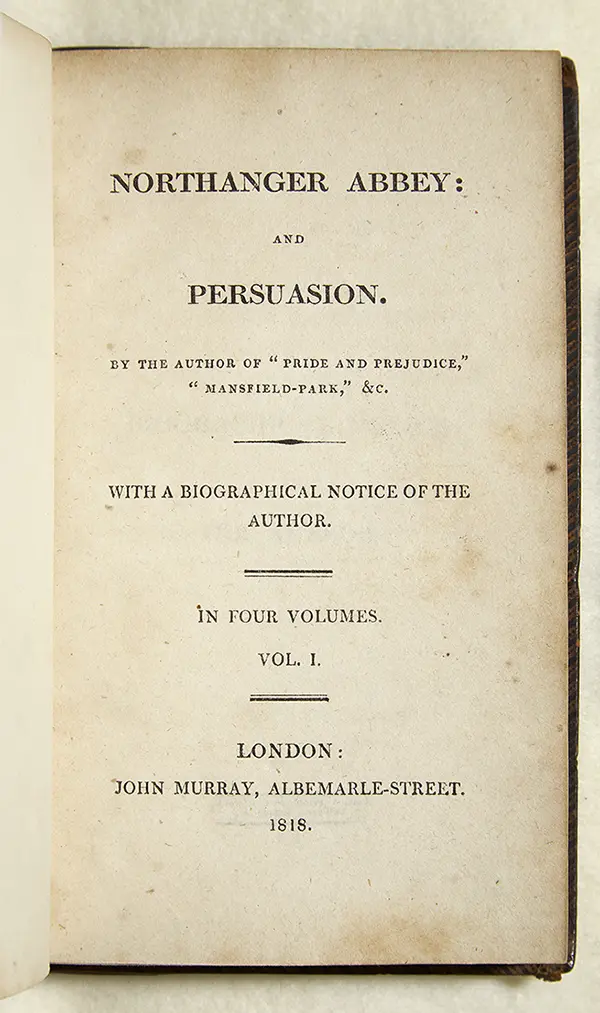
The book was published in a four-volume set with Persuasion, and Northanger Abbey took the first two volumes.
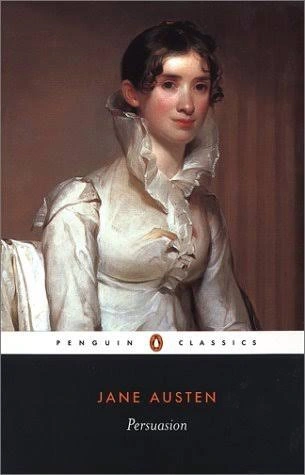
6. Persuasion
Persuasion is among the top three widely celebrated works of Jane Austen, published posthumously in 1817. It is the final completed novel, featuring Jane’s classic themes of marriage, family, social crossings, tension, and growth.
“Persuasion” follows the story of Anne Elliot, a 27-year-old woman, almost destined to be a spinster. Completely devoid of any familial love, she is persuaded by her late mother’s friend and widow, Lady Russell, to break the engagement with Captain Wentworth at the age of nineteen because of differences in social standing. Years later, when Wentworth and Anne’s paths cross, she is persuaded to engage with Captain Wentworth again.
Although quite popular in the 19th century, the novel gained significant fame in the 20th and 21st centuries. It is a classic Jane Austen novel with the prominent themes of social standing, class mobility, persuasion, marriage, and family dynamics. The novel is perfect if you love second-chance and yearning tropes.
Why You Must Read Persuasion:
Last Classic Novel by Jane Austen
Romance Tale with Second Chance and Yearning Trope
One of the Mature and Evolved Works by Austen
Romantic Letters Filled With Intense Love and Passion
Jane Austen’s Unfinished and Lesser-Known Works
Here’s a list of unfinished and lesser-known Jane Austen books in order of writing:
Juvenilia (1787-1793)
Lesley Castle (1792)
Lady Susan (1794)
The Watsons (1803)
Sanditon (1817)
1. Juvenilia
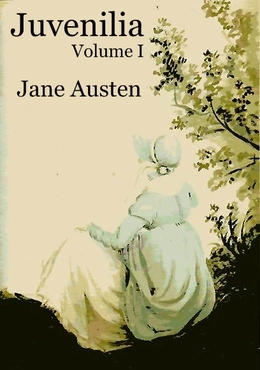
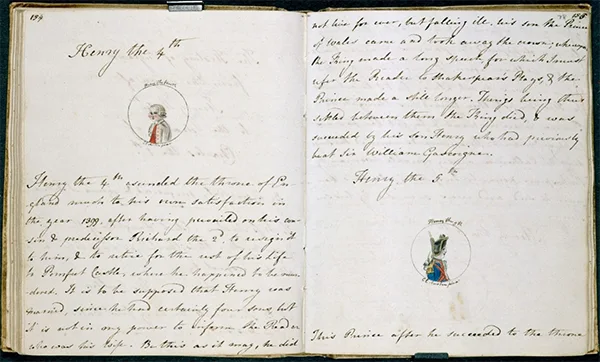
Juvenilia are the volumes of Jane Austen’s short stories, poems, and plays, written during her teenage years for family amusement. These volumes are packed with her wit, humour, and satire, and comprise wild and funny stories, satires, comic sketches, mock moral tales, and history. One of the most popular tales from these volumes is The Beautiful Cassandra, which satirizes the overly sentimental novels popular during that age.
Written: 1787-1793
Published: 1922-1951
2. Lesley Castle
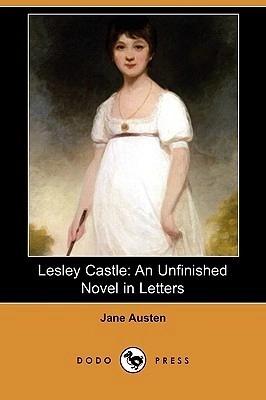
Lesley Castle is a series of letters written by Jane Austen when she was sixteen. It follows the thoughts of two friends, Miss Margaret Lesley and Charlotte Lutterell, on marriage, courtship, family scandal, elopement, divorce, adultery, and remarriage. The work is known for its biting satire and her signature wit.
Written In: 1792
Published In: 1951
3. Lady Susan
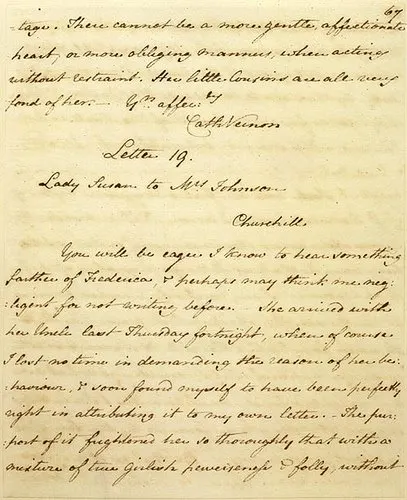
Lady Susan is a short epistolary novel about a widow, Lady Susan, a clever and manipulative woman, seeking a secure and financially advantageous marriage for her and her daughter.
Written in: 1794
Published in: 1871
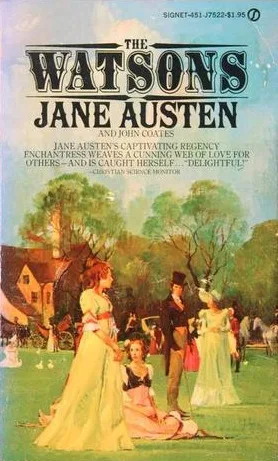
4. The Watsons
It’s an unfinished novel about 19-year-old Emma Watson, who returns to her financially struggling family after spending her childhood in a wealthy relative’s estate. Stuck in dire poverty and with her father’s declining health, the novel focuses on marriage as a means of social security for Emma’s sisters and awkward social choices in the face of adversity.
Written C.: 1803
Published In: 1871
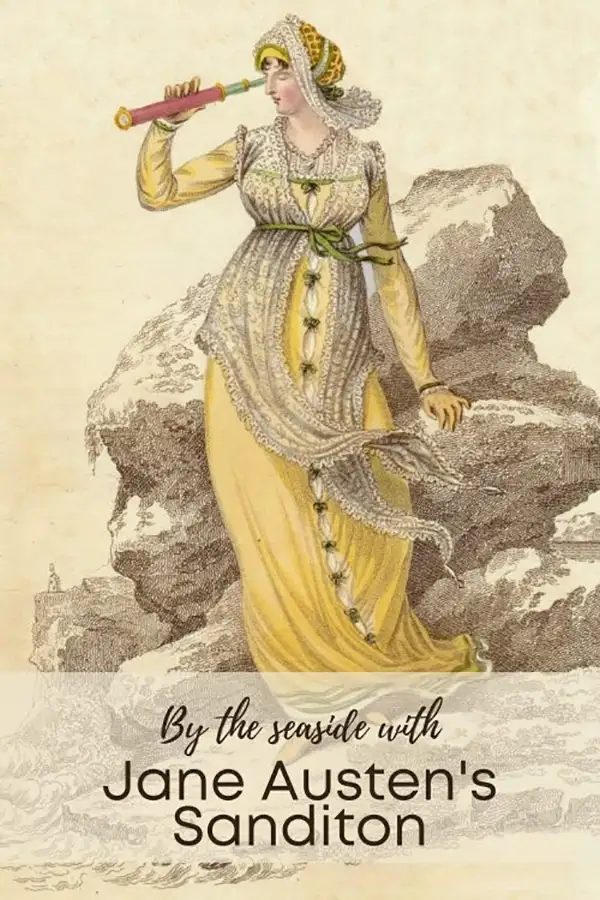
5. Sanditon
Sanditon is a story of Charlotte Heywood, who visits a seaside town called Sanditon and finds a world of superficial and odd community behavior, health obsessions, and complex family dynamics.
Written In: 1817
Published In: 1925
My Recommended Reading Order
If you want to understand Austen’s wit, humour, and sharp satire, here’s an order of how you should delve into her writing:
S No.
Jane Austen Novels In Order
Why It Should Be Read in the Given Order
1.
Pride and Prejudice
It’s a classic and cult favourite for a reason.
Offers an iconic love story
Perfect introduction to Austen’s wit and romance tales.
2.
Sense and Sensibility
Continues the sisterhood trope as in P&P, albeit in different ways.
Ideal for understanding Austen’s social commentary.
New Themes of Reason Vs Passion
3.
Northanger Abbey
A preferably light and playful read.
Ideal for understanding Austen’s satire and love for Gothic fiction.
Hilarious themes by Austen
4.
Emma
Humour and romance
Complex and flawed protagonist
5.
Mansfield Park
Complex themes of morality, class, and social expectations.
Controversial work
6.
Persuasion
Witness the layered and evolved writing of Jane Austen
Witty, complex, and demanding.
Ideal finale for love, exploration, and second chances.
Do You Need To Follow A Strict Order For Jane Austen Books?
No, there’s no specific order for reading Jane Austen novels. All the novels are individual and do NOT follow a sequel method.
But to properly understand her complex writing, wit, satire, and humour, you must begin by reading:
Pride and Prejudice
Sense and Sensibility
Persuasion
These novels are classic Jane Austen novels, ideal for getting you accustomed to her writing style, classic themes, social commentary, and satire.
Interesting Fact:
You can also visit Jane Austen’s house, located on Winchester Road in Hampshire, England. This is the house where Jane lived, wrote, and revised all of her six widely acknowledged novels.
The house now also features a museum, showcasing Jane Austen’s collections, personal letters, and first drafts of her novels.
Pride and Prejudice is considered Jane Austen’s best novel. It follows an intense love story, marked by misunderstandings and personal growth. The protagonists of P&P are one of the most celebrated and memorable protagonists, making it a must-read Jane Austen book.
Do Jane Austen’s books need to be read in order?
No, there’s no specific order for reading Jane Austen novels. All the novels are individual and do NOT follow a sequel method. However, start by reading Pride and Prejudice, a classic book to get into Austen’s witty writing style and social commentary.
Which Jane Austen book should you read first?
Pride and Prejudice, followed by Sense and Sensibility, is the first Jane Austen book you must read to understand her wit, writing style, classic themes, social commentary, and romantic tales.
What are the six major novels of Jane Austen?
Sense and Sensibility, Pride and Prejudice, Mansfield Park, Emma, Northanger Abbey, and Persuasion are the six major and widely acknowledged works of Jane Austen.
How many books did Jane Austen write?
Jane Austen wrote and published 6 books during her lifetime and posthumously. However, there are over 5 unfinished works published shortly after her death.